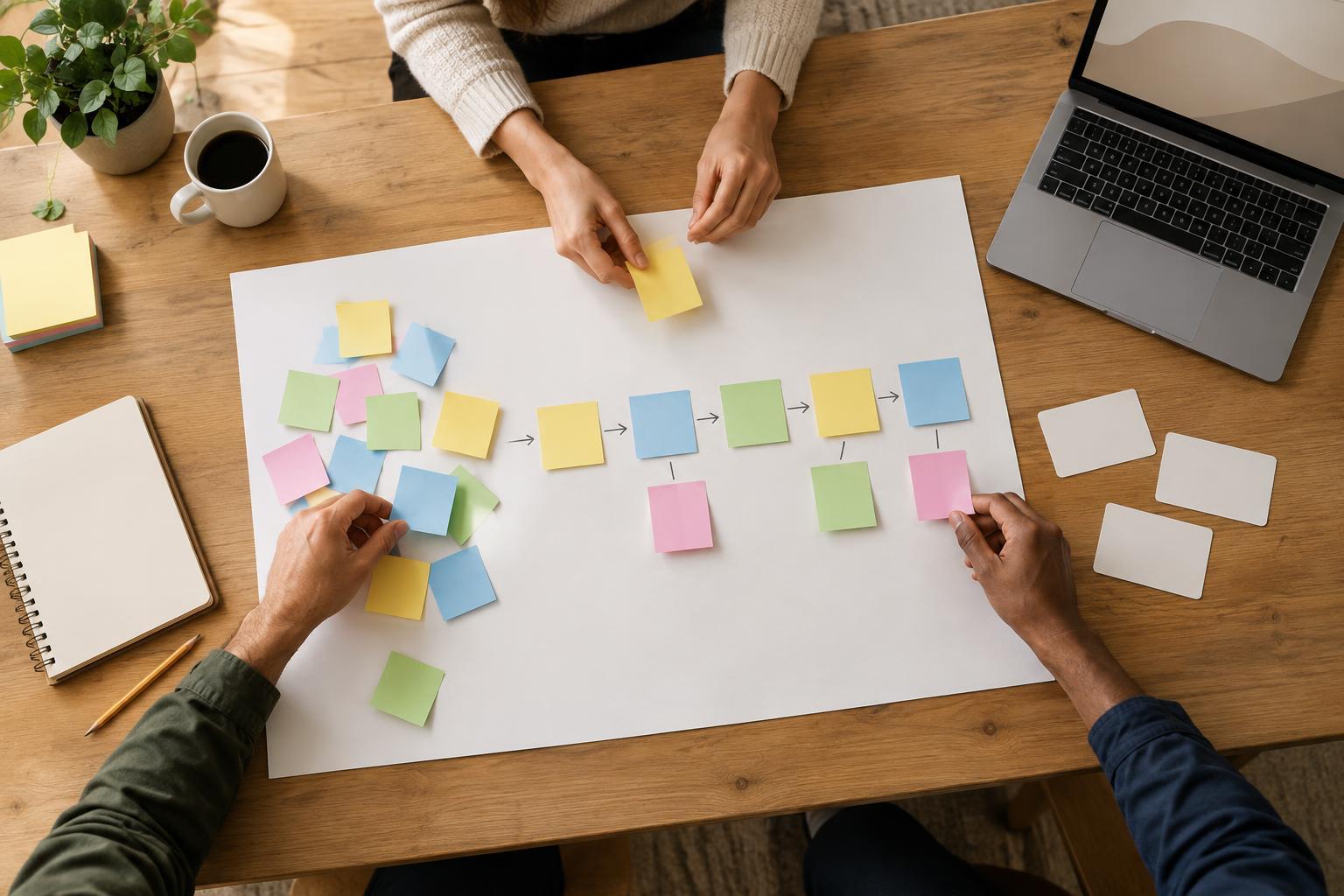
Start with the outcome, not a complete task list
Uncertain requirements do not mean a project has no direction. Begin by writing down the outcome the work is meant to support, who will use or approve it, and what a successful first delivery should make possible. A student designing an exhibition website, for example, may not know which images will be available yet. They can still establish that visitors need to find the exhibition details and understand what the work is about.
Keep the initial brief short. Include the intended audience, the problem to solve, known constraints, likely deliverables, and the person who can make final decisions. Mark anything unconfirmed rather than filling the gaps with guesses. This gives collaborators a shared starting point without making an early idea look like a settled requirement.
Separate facts, assumptions and open questions
A plan becomes easier to use when it shows what the team knows and what it still needs to learn. Record confirmed requirements separately from assumptions and open questions. For each open question, note who can answer it, when an answer is needed, and what work it affects. If a client has not chosen between a single landing page and a larger site, that decision affects design and build effort; it deserves more attention than an undecided button label.
Some questions can wait. Others block several tasks or could cause substantial rework. Prioritize the unknowns with the greatest effect on scope, schedule or user experience. Give each one a next step: ask a stakeholder, inspect existing content, prepare two rough options, or make a temporary assumption. If you proceed on an assumption, write it down so the team knows when to revisit it.
Plan in stages that produce useful evidence
Instead of scheduling every detail from start to finish, plan a short sequence of stages. A simple path might be discovery, a rough concept, review, production and final checks. Define a tangible output for each stage, such as a content outline or clickable prototype, along with the decision that output should help people make. This keeps early work focused on learning rather than polishing something that may change.
Choose small tests for the riskiest parts of the project. A freelancer creating a brand identity might show a client two visual directions before developing a full set of assets. A small team planning an app might sketch its main workflow before designing every screen. These tests do not guarantee the right answer, but they can reveal misunderstandings while changes are still manageable.
Build flexibility into scope and review
An uncertain project benefits from a clear minimum delivery. Decide what must work or be present for the first version to be useful, then list optional additions separately. If final photography is not ready, for instance, a team can agree on the image specifications and use placeholders during layout work. This allows progress without pretending the missing material has been approved.
Set review points before major commitments, such as moving from a concept to production. At each review, confirm what has been decided, what has changed, and whether the remaining work still fits the available time. If a new requirement appears, discuss its effect on other work rather than silently adding it to the list. The practical choices may be to replace a lower-priority feature, extend the schedule or defer the new request.
Keep the plan easy to update and share
Use one accessible place for the current brief, decisions, open questions and next actions. It can be a shared document or a project board; the tool matters less than the habit of keeping it current. Name an owner for each action and record decisions in plain language, including any constraints that shaped them. This helps someone joining later understand not only what the team chose, but why.
Treat the plan as a working guide, not a promise that nothing will change. After each review, update the next few tasks and tell collaborators which assumptions have been confirmed or replaced. When delivery approaches, check the finished work against the agreed minimum and document anything intentionally left for later. A project with uncertain beginnings can still end with a clear, reviewable result if its decisions remain visible along the way.